
Nuclear engineer / Founder / CEO @ Rather Labs
Field notes on
systems that
must not fail.
Nuclear engineering taught me how systems behave when failure is not an option. These are the notes I keep while applying that to companies, products, and AI.
008 entriesSeries / AllQuery / none
How Does a Water-Cooled SMR Work? An Interactive Diagram
Follow the heat from nuclear fuel to electricity in a water-cooled SMR. Explore the primary loop, steam generator, turbine and condenser in an interactive diagram.
- Nuclear
- Engineering


Natural Circulation in SMRs: What Drives the Flow?
How can an SMR circulate coolant without a primary pump? Explore buoyancy, height and flow resistance with an interactive natural-circulation model.
- Nuclear
- Engineering

Neutronics–Thermal-Hydraulics Coupling: An SMR Example
Explore neutronics–thermal-hydraulics coupling in a water-cooled SMR with an interactive core diagram and a Picard–Newton comparison.
- Nuclear
- Engineering
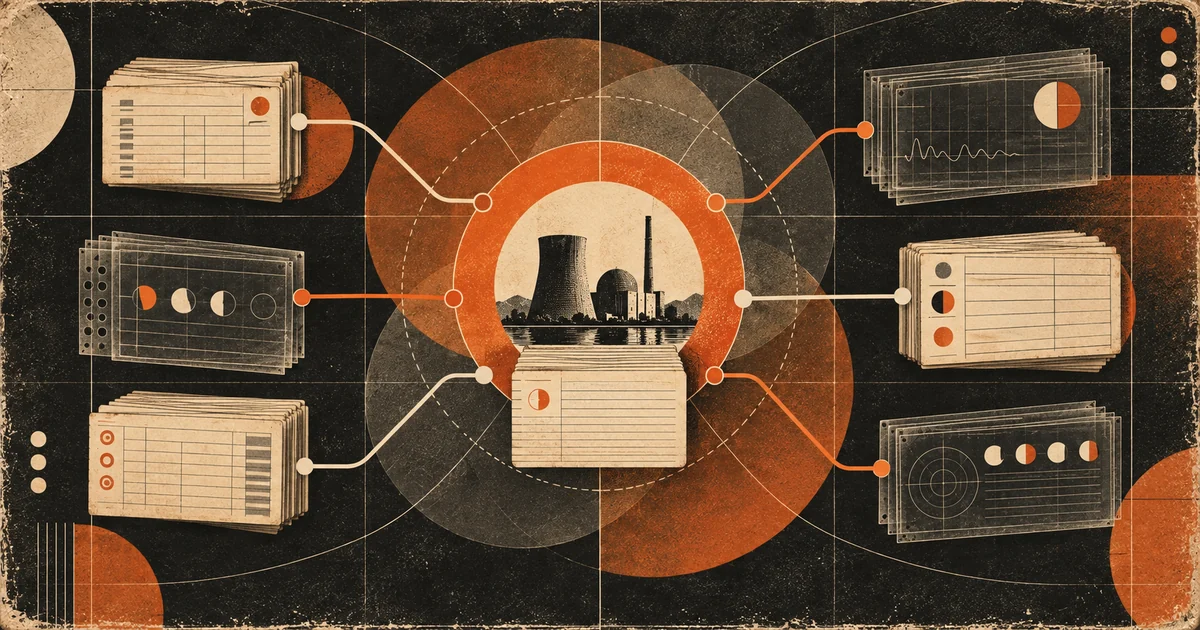
Nobody Owns the Joins: Nuclear Data and Why We Built Reactor Atlas
Every authoritative nuclear dataset measures something slightly different, at a different date, under a different definition. Reactor Atlas keeps every reading, publishes the rule that picks the headline figure, and checks the result against what regulators and grid operators publish.
- Nuclear
- Engineering

Reactor Atlas: A Nuclear Facility Map of Earth, Across Time
Reactor Atlas is a nuclear facility map of every power and research reactor on Earth, plus the fuel cycle. Scrub history, compare nuclear reactors by country, and follow nuclear news, signals and alerts.
- Nuclear
- Engineering
- AI systems

Criticality: The Physical and Numerical Models
A pressurised water reactor that runs in a browser tab. The physics it solves, the integrator each part gets and why, how the parts are coupled, what the model is for, and where it stops.
- Nuclear
- Engineering
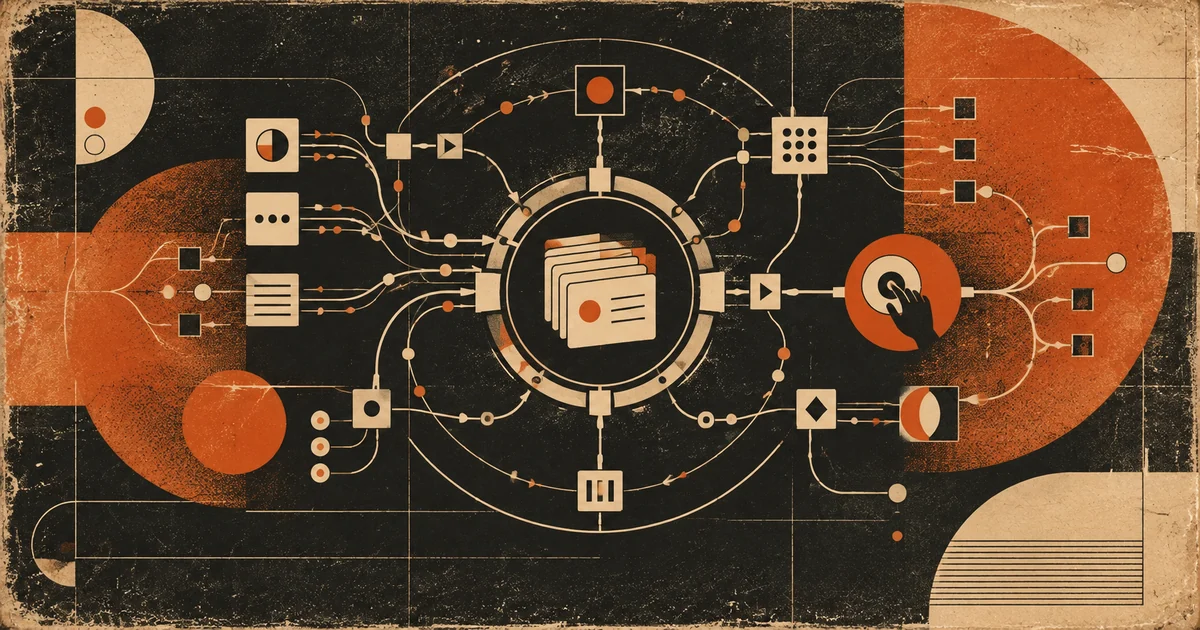
AI-Native Is Not a Chatbot. It Is a Graph That Never Sleeps.
Buying seats for a chat assistant does not make a company AI-native. It takes loops that run around the clock, engineering graphs with humans only at the expensive gates, and a context layer defended the way a containment is. And it changes what the people are there for.
- AI systems
- Leadership
- Entrepreneurship
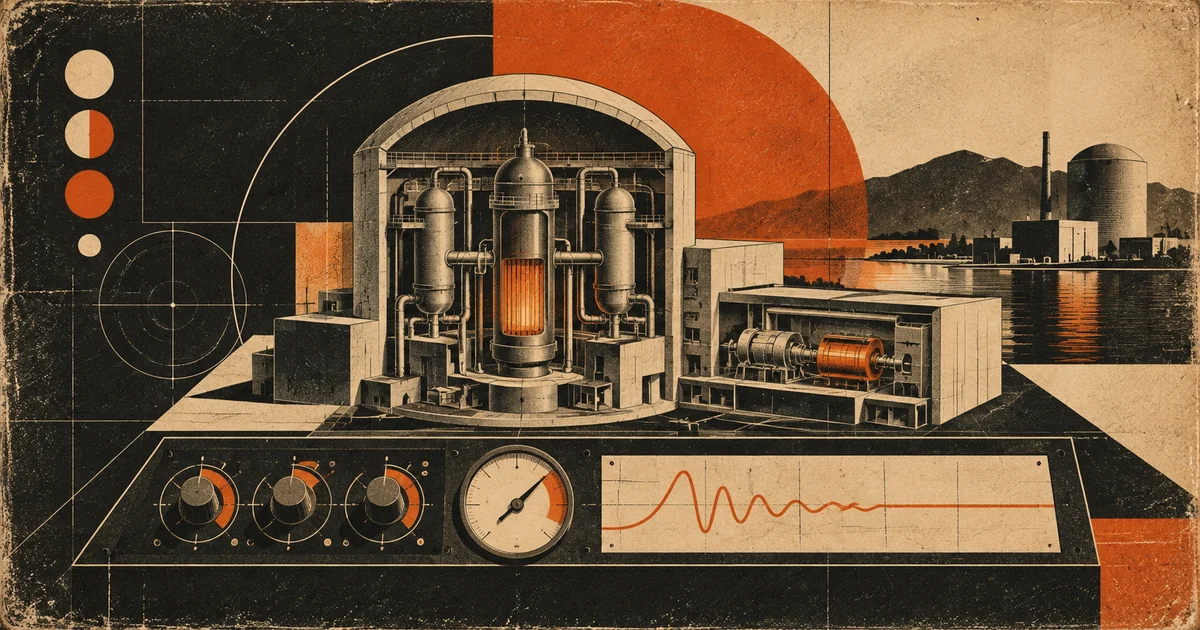
I Built a Nuclear Power Plant Simulator That Runs in Your Browser
Xenon-135 peaks about nine hours after you shut a reactor down, and until it decays a restart is physically impossible. Criticality is a full 4-loop PWR running at 60 fps in your browser, so you can watch that happen instead of reading it off a whiteboard.
- Nuclear
- AI systems
Before this log
FC—LOG / EXTERNAL RECORD
Published
elsewhere
Written for the Rather Labs engineering blog / moving here
The enterprise AI brain, without the data leak: Cloudflare OS + Castform
Written for the Rather Labs engineering blog.
- AI
- Software Engineering
The database was the last thing we optimized for agents. It should have been the first.
Written for the Rather Labs engineering blog.
- AI
- Software Engineering
The prompt was never the hard part. The graph is.
Written for the Rather Labs engineering blog.
- AI
- Software Engineering